

May 8, 2012
Graduating in Era of Low Opportunity
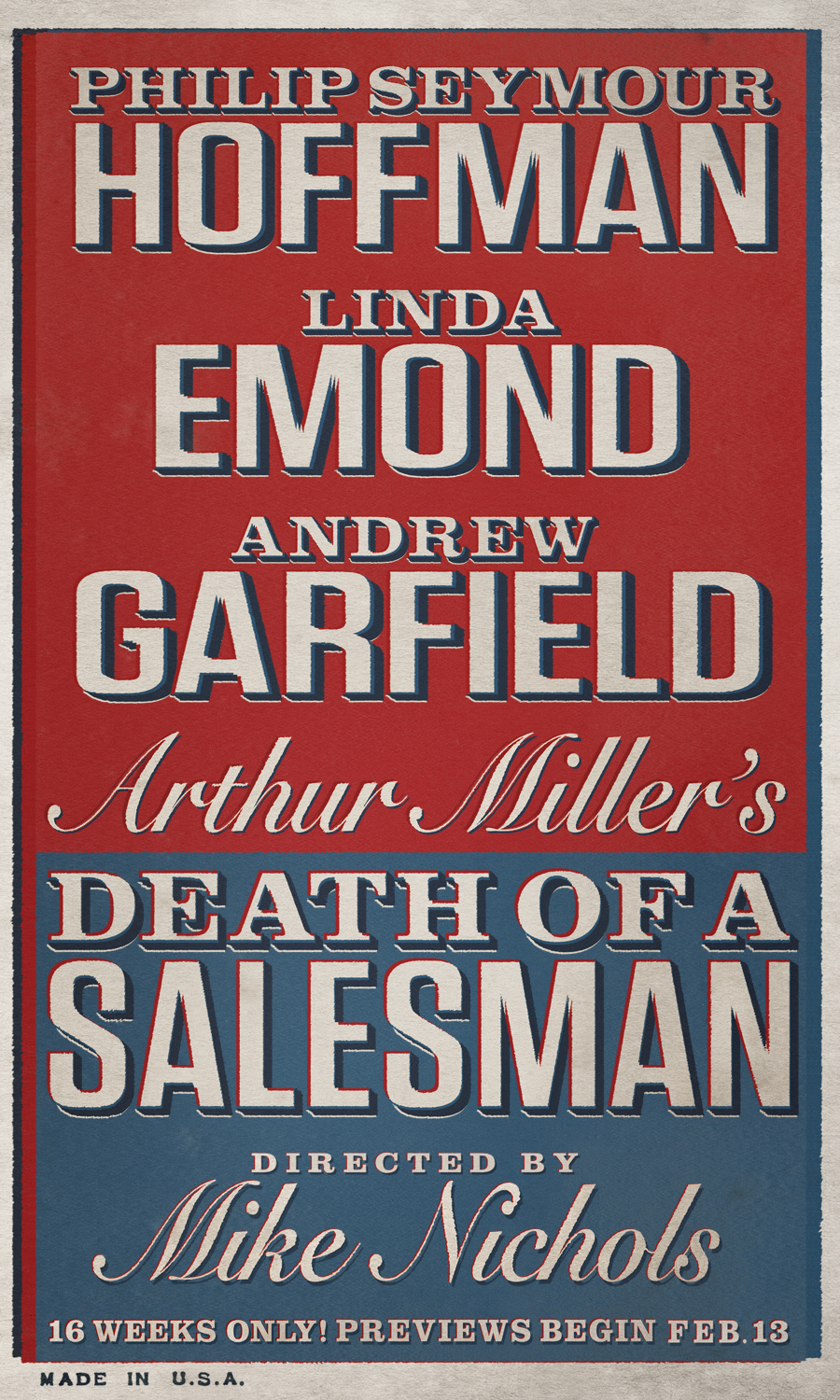 Philip Seymour Hoffman playing the washed-up salesman, Willy Loman, in “Death of a Salesman,” is all the rage on Broadway. But when I saw the play recently, it was Biff who got me thinking about young adults today.
In the Arthur Miller classic, Willy anguishes over son Biff’s failure to hold down a job in the city. But the irony is that Biff, played by Andrew Garfield, probably did very well for himself after leaving Brooklyn for Texas. I imagine he became an oil baron or wound up owning substantial real estate in downtown Houston.
Young people graduating from high school or college today don’t have the virtually unlimited opportunity that existed in the 1940s when Miller wrote the play: the personal drive to find a job and establish a career is not enough anymore. Young graduates who sign up for unpaid internships and double up on college degrees are well aware of this.
Last year, 54 percent of adults ages 18 to 24 were employed – that was the lowest level since the government started tracking the data, in 1948 – according to a February report by the Pew Research Center. Despite an improving job market, it was only 55 percent in March. Job creation – 115,000 were added in April – is below the pace that will open up meaningful opportunity for young people. …Learn More
April 12, 2012
Fraud Against Elderly Documented
Chilling. That sums up a documentary about financial fraud against elderly people premiering tomorrow at the Quad Cinema on 13th Street in Manhattan.
“Last Will and Embezzlement” is about fraudsters who seek out vulnerable elderly people suffering from cognitive decline for no other purpose than to exploit their trust and steal their money. It’s not uncommon for these con men and women to be family.
By first-time producers Pamela Glasner and Deborah Louise Robinson, the film would’ve benefitted from more reporting and more focus – they try to do too much when they get into court systems and solutions. But the film does what journalism does best: It finds people willing to tell personal gripping stories – not easy to do – and gives them a voice.
- Mickey Rooney, 91, relived his searing emotional pain on screen, as he recounted how his own nephew “swindled” his money years ago.
- An elderly woman with Alzheimer’s was persuaded by a mortgage broker to take out a complex reverse mortgage, which resulted in foreclosure on her home and a legal battle waged by her children. “My mother was incapable of understanding any of this,” her daughter said. …
March 15, 2012
Fraudsters Hone Art of Disguise
Tried-and-true financial frauds – Ponzi schemes, high-yield investments, and “pump and dump” stock scams – have victimized unsuspecting targets for decades, even centuries.
These well-known frauds are effective, because con men change their disguises so they won’t be recognized. Six common disguises are detailed in a report I wrote for the Financial Security Project at Boston College’s Center for Retirement Research, which hosts this blog.

February 21, 2012
Investment Humor Not an Oxymoron
You have to admire a financial writer and editor with the guts to put this on his LinkedIn profile: “While many Wall Street people go to Harvard or Yale University to learn about business, Ron went to art school.”
The cartoons shown here are in a humorous financial book by Ronald DeLegge 2d, who said he first earned his chops as an insurance salesman at a small Midwestern company that eventually became part of AIG. His cartoons appear in “Gents with no ¢ents: A closer look at Wall Street, its customers, financial regulators, and the media.” Dave Clegg was the illustrator.
Enjoy.Learn More

February 9, 2012
The Science Fiction of Financial Markets
A lot of us feel when we look at the Dow Jones plunging [that] we’re in the grip of some alien force that slips human control. — Novelist Robert Harris
The stock market in May 2010 seemed to “come alive” when it swooned 1,000 points within minutes, Harris said in a bone-chilling radio interview that’s worth a listen for Main Street investors.
His new thriller, “The Fear Index,” which the London Telegraph called “unputdownable,” is about a hedge fund manager. But in the interview, Harris expressed his desire to take readers beyond the business reporter’s technical explanations for the market’s wild swings up or down. A solitary, $4 billion trade, the media widely reported, caused the 2010 Flash Crash that left an impression on the novelist. As Europe teeters on recession, it’s anyone’s guess how the Standard & Poor’s 500 stock market index has managed to soar more than 7 percent since Jan. 1.
Wall Street experts may be able to make sense of a hair-trigger market, but Harris’s sci-fi explanation is appealing to the rest of us. He invokes the imagination – or, perhaps I should say, the artificial intelligence lab at the Massachusetts Institute of Technology.
To hear Harris’ interview on National Public Radio, click here.Learn More

February 2, 2012
Teen Play about Money is “Eye Opening!”
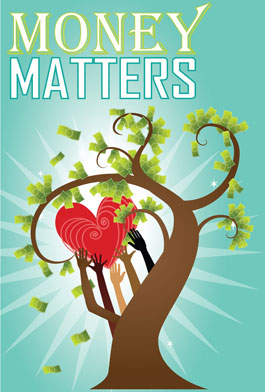 “Money Matters,” a play that opened last weekend in Cambridge, Mass., demonstrated the financial wit of its teenage actors at the same time that they – and the audience – embraced the complexities of money.
Credit versus debt, income differences among classmates, money and relationships, certificates of deposit, needs versus wants – this only scratches the surface of the subject matter in the Youth Underground theater production, which begins touring the Boston area in February.
The actors clearly were having fun, but their performance served as an educational tool that might be replicated. For example, the screenplay was based on the actors and other teenagers’ 80-some interviews of community residents about their financial viewpoints and mishaps. The stories generated ideas for the vignettes that were stitched into a screenplay.
“Very eye-opening!” audience member Cameron Netland, 16, said after the performance.
“I learned the difference between saving and spending and between debit and credit!” said Aaliyah Nathan, 14, who, wearing black suede boots to the performance, admitted a weakness for new shoes. …Learn More
December 20, 2011
Cheatin’ Art Exhibited at Duke
 Money and cheating go hand in hand – now add art to the mix.
An art exhibit was inspired in part by the research that found a “robust relationship between creativity and dishonesty” by Francesca Gino at the Harvard Business School and Dan Ariely of Duke University, a behavioral economist who founded Duke’s Center for Advanced Hindsight, the location of the exhibit.
What does the art say to you – about financial planning, the scammers who slink among us, or our money culture? Squared Away picked pieces by two of the exhibit’s 22 artists, who are from North Carolina, Israel and elsewhere. The artists’ explanations are included with their work: …
Learn More
About Squared Away

Learn more about our blog and its writer, Kimberly Blanton, a former Boston Globe reporter.
