


February 28, 2013
The IRA Tax Deduction Beckons
At tax time, many Americans think, often fleetingly, about spending less and socking away more for retirement.
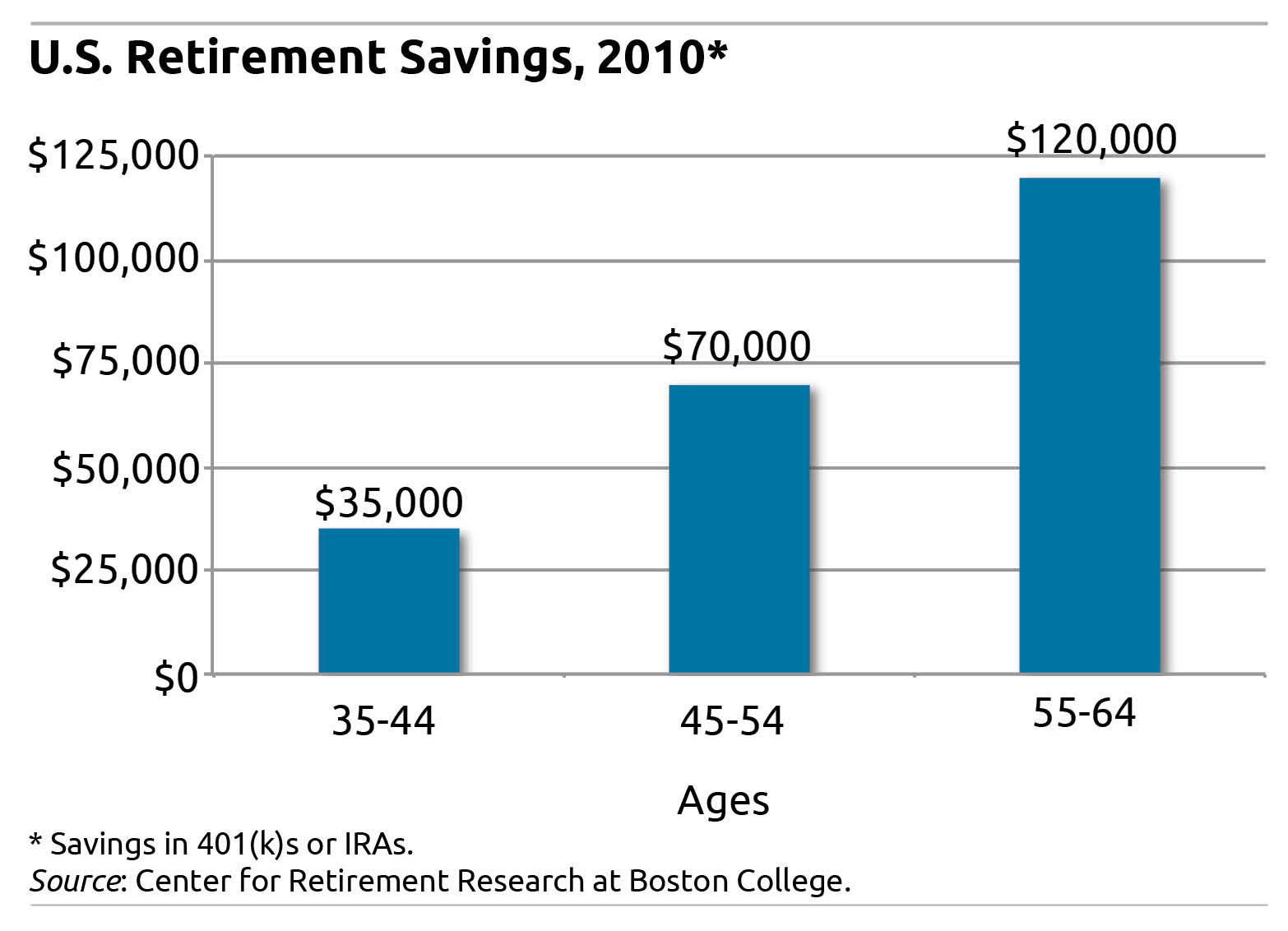
Until April 15, the IRS permits people who do not have a pension plan at work to deduct up to $6,000 for money placed in an IRA; taxpayers who do have an employer pension can also receive the IRA deduction if their earnings fall under the IRS’ income limits.
The tough question that trips people up is: How much will I need?
The easy way to think about this is in terms of the income necessary to maintain your current standard of living after the paychecks stop coming in. Click here for a tool that estimates both how much you’ll need and how much you’ll have if you continue on your current path.
The calculator, created by the Center for Retirement Research, which supports this blog, was designed for people over 50 and on the retirement runway. Younger people can also get a ballpark idea of how they’re doing using the calculator. Or click here for the percent of your wages to put into a tax-deferred retirement fund.
This is a beta website with a few kinks, and it works smoothly only on the Safari and Google Chrome browsers. But the results are sound and backed by academic research. Here’s how to read the results. …Learn More
January 31, 2013
Tally Your Mutual Fund Fees Here
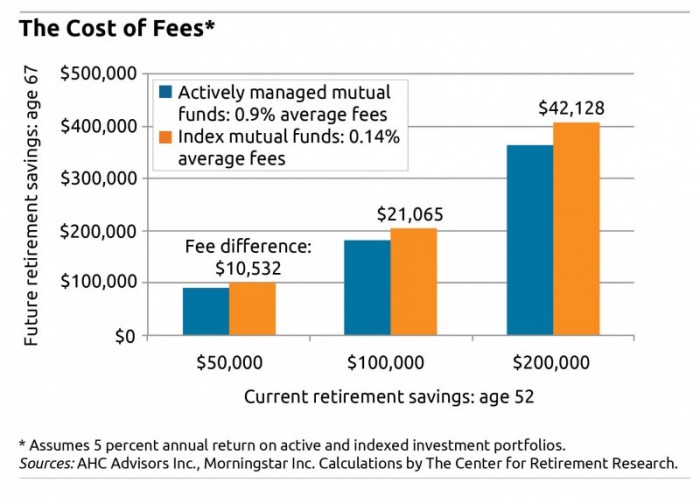
Those mutual fund fees sure add up fast.
“The average person has no idea” how much fees and expenses sap from their investments, said Ted Leber, a retiree who was a staffer with the Chief of Naval Operations and a financial adviser to service members.
The career Navy man said he was a failure after retiring to become an adviser, because he kept steering clients to low-fee mutual funds that replicate index returns, such as the S&P 500 or NASDAQ tech-stocks. The index funds helped his clients but not his firm’s profits.
Squared Away interviewed Leber after he emailed a nifty fee calculator, which was put online as a public service by AHC Advisors Inc.’s president, Craig Larsen, in St. Charles, Illinois.
Larsen and Leber join a growing number of academics, financial planners, and investors balking at the high fees middle-income investors pay for mutual funds that are actively managed by stock pickers. Fees are “costly for the average employee” and “can take a substantial toll on their retirement,” according to a study by the Center for Retirement Research at Boston College, which supports this blog.
Test the employee calculator yourself. First, look at the conservative assumptions Squared Away used to calculate fees on three portfolios, as shown in the above chart…Learn More

December 6, 2012
Readers’ Picks for 2012
Squared Away readers’ favorite articles during the year reflect America’s biggest financial challenges: paying for college and retirement.
The following are the Top 10, according to an online analysis of blog articles with the most unique visits by readers. A link to each article is embedded in the last word of each headline:
It Pays More Than Ever to Delay
The Long-Term Care Insurance Gamble
Boomer Moms, Here’s a Radical Idea
For Many Elderly, Little Left at Life’s End
Why Baby Boomers Can’t Retire …Learn More
November 1, 2012
Kids to Washington: Keep It Real
Leave it to high school kids to inject some much-needed perspective into our economic and policy debates.
In Tuesday’s election, the presidential election may come down to a few swing states. But the next president, whoever he is, faces tough challenges – topped by the massive destruction of roads and transit systems wreaked by Hurricane Sandy, a tepid economy, and the “fiscal cliff” that a divided Congress enacted to automatically cut the $1 trillion budget deficit.
This video, by students at the East Coweta High School in Sharpsburg, Georgia, was among the winners of a contest sponsored by the Council for Economic Education, a national financial literacy organization that also has state chapters.
Click here for winning videos submitted by high schools in New Jersey and Maryland.Learn More

October 25, 2012
A Dozen Things Women Need to Know
While Squared Away’s goal is to increase everyone’s understanding of how their behavior affects their financial security, substantial attention has been paid to women.
Since going live in May 2011, this blog has posted numerous articles on women’s unique – and often more challenging – financial concerns. Women earn less, live longer, save less for retirement, and are more likely than men to take on the financial burdens associated with caring for children or elderly parents.
Click on “Learn More” for links to a dozen recent articles, from the concerns of young career women to widows. They include “He’s a Rabid Saver; She’s a Spender,” and “Boomer Moms: Take Care of Yourself For Once,” and “You Are Not Alone…”
Learn More
October 9, 2012
401(k) Education Missing A Target
Dennis Ackley says he doesn’t get a lot of holiday cards from the mutual fund industry.
The Kansas City, Missouri, consultant has become a well-known critic of the 401(k) materials that funds provide to employers, which usually leave the complex job of retirement planning to the workers to figure out. When speaking to a room full of 401(k) plan sponsors, he has a unique way of getting his point across. Ackley hands out sheets of paper similar to what’s shown here and asks them to wad them up and throw them at the target.
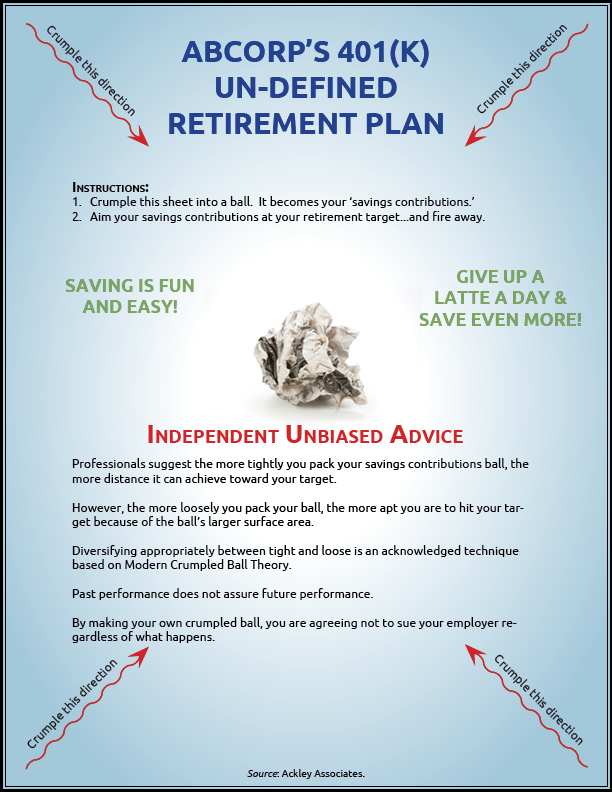
The problem – for the plan sponsors in the audience – is that Ackley doesn’t give them a target.
“Most of them are just kind of befuddled by the whole thing.” Befuddlement, he tells is audience, “is what young employees experience sitting in a 401(k) meeting.” …Learn More
October 4, 2012
The Long-Term Care Insurance Gamble
A good friend in Houston recently emailed me to ask whether she should buy long-term care insurance. Let me be very clear about my answer: I have no idea.
This writer is like baby boomers everywhere trying to get a grip on this long-term care stuff. Where to start?
First, let’s look at the prices for long-term care. Squared Away used data from Genworth, one of the nation’s largest insurers in this market, to generate a U.S. map with the median cost in each state of a semi-private room in a nursing care facility.

Genworth’s goal is obviously to sell insurance. But I ran its data by a few people, and it held up well, with a few observations and caveats discussed later…Learn More
About Squared Away

Learn more about our blog and its writer, Kimberly Blanton, a former Boston Globe reporter.
