

Posts Tagged "manage money"
March 8, 2012
Bosworth: Why It’s Hard to Save
In this video, a senior fellow at the Brookings Institution talks about his latest book and offers a clear-sighted explanation for complex macro-economic forces that shape all Americans’ saving habits and financial security.
Starting in the early 1980s, stock markets boomed and housing prices increased year after year, and Americans “thought they were getting rich,” explains economist Barry Bosworth. “So they thought, ‘Let’s spend a little bit of it.’ “
Billions of dollars of wealth vanished in the 2008 financial market collapse, marking what may be the end of a golden era of wealth formation and undermining plans laid by workers and retirees, he said. Bosworth’s book was released last month: “A Decline in Saving: A Threat to America’s Prosperity.”
Full disclosure: The book incorporates research funded by the U.S. Social Security Administration (SSA) through the Retirement Research Consortium, which also funds this blog. The opinions and conclusions expressed are solely those of the blog’s author and do not represent the opinions or policy of SSA or any agency of the federal government.
March 6, 2012
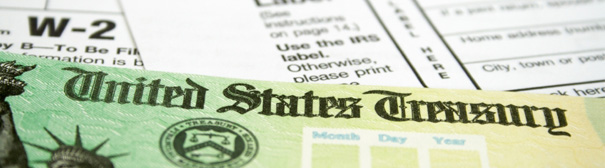
Extra in Refund Checks Spurs Savings
A breakthrough experiment determined that some low-income tax filers are willing to save part of their IRS refund after all.
What separates savers from non-savers is each individual’s own “mental accounting.” What specifically influences them is whether their refunds exceeded their anticipation.
The research found that 7 percent of all low-income filers saved part of their refunds. But 12 percent of people who got more than they’d anticipated agreed to save – they did so by opening a savings account or buying a US savings bond or certificate of deposit. Only 4.5 percent of those who got the same as, or less than, anticipated, saved part of it.
“At tax sites, most people don’t save,” said Michael Collins, director of the Center for Financial Security at the University of Wisconsin, Madison. “But if you target the right people you might find some savers.” His research controlled for income, demographics and the refund amount. …Learn More
March 1, 2012
Retirement Security Set by Life Decisions
Looking back on a lifetime of financial decisions from Squared Away on Vimeo.
In the second of two videos, retirees from the Savin Hill Apartments in Boston’s Dorchester neighborhood spoke honestly about the decisions they made during their working lives that have affected their financial security in retirement. The residents come from all walks of life and from home towns ranging from Dabrowa Tarnowska, Poland, and Thomasville, Alabama, to around the corner in East Boston.
The first video can be viewed here.
Learn More
February 28, 2012
Getting by on Social Security
Retirement: Getting by on Social Security from Squared Away on Vimeo.
Before retiring, James Gomes said he often wasted his regular paychecks from General Electric. Arlene Starr wishes she’d saved – like her sister did. And immigrant Trung Quang Pham’s low income made it tough to set money aside.
They are residents of the Savin Hill Apartments in Boston, most of whom are “pretty much on fixed incomes,” said apartment manager Sandra Baker of CMJ Management Co.
They are not alone either. Millions of retirees rely on Social Security’s fixed monthly pensions, which average $1,181. The federal pension program provides the vast majority of retirement income for nearly one in four retired couples and nearly half of the elderly living alone. And new research for the first time determined that a large swath of the elderly leave this world with little or no assets left in savings and personal retirement accounts.
In the first of two videos, retirees in the Savin Hill Apartments generously agreed to discuss the issues they face for Squared Away. The second video – about their financial decisions and regrets over a lifetime – appears Thursday. …Learn More

February 21, 2012
Investment Humor Not an Oxymoron
You have to admire a financial writer and editor with the guts to put this on his LinkedIn profile: “While many Wall Street people go to Harvard or Yale University to learn about business, Ron went to art school.”
The cartoons shown here are in a humorous financial book by Ronald DeLegge 2d, who said he first earned his chops as an insurance salesman at a small Midwestern company that eventually became part of AIG. His cartoons appear in “Gents with no ¢ents: A closer look at Wall Street, its customers, financial regulators, and the media.” Dave Clegg was the illustrator.
Enjoy.Learn More

February 9, 2012
The Science Fiction of Financial Markets
A lot of us feel when we look at the Dow Jones plunging [that] we’re in the grip of some alien force that slips human control. — Novelist Robert Harris
The stock market in May 2010 seemed to “come alive” when it swooned 1,000 points within minutes, Harris said in a bone-chilling radio interview that’s worth a listen for Main Street investors.
His new thriller, “The Fear Index,” which the London Telegraph called “unputdownable,” is about a hedge fund manager. But in the interview, Harris expressed his desire to take readers beyond the business reporter’s technical explanations for the market’s wild swings up or down. A solitary, $4 billion trade, the media widely reported, caused the 2010 Flash Crash that left an impression on the novelist. As Europe teeters on recession, it’s anyone’s guess how the Standard & Poor’s 500 stock market index has managed to soar more than 7 percent since Jan. 1.
Wall Street experts may be able to make sense of a hair-trigger market, but Harris’s sci-fi explanation is appealing to the rest of us. He invokes the imagination – or, perhaps I should say, the artificial intelligence lab at the Massachusetts Institute of Technology.
To hear Harris’ interview on National Public Radio, click here.Learn More

January 26, 2012
Questioning Wall Street Convention
Walk into your financial adviser’s or broker’s office, and the conversation inevitably leads to your portfolio’s “asset allocation” and “total return.”
Financial planners, the media, investors – we’ve been under Wall Street’s spell for three decades. But a small chorus of skeptics, bucking the orthodoxy, argues that brokers and planners don’t always match investments with an individual’s goals and needs. The human gets lost – in more ways than one.
“People are being guided by the asset management industry,” said Boston University finance professor Zvi Bodie, co-author, with consultant Rachelle Taqqu, of “Risk Less and Prosper: Your Guide to Safer Investing.”
The industry’s premise is that “you can’t afford not to take risk,” he said, referring to the tenet that more risk means a larger potential return. But what happens if you roll the dice and lose? “They never say that,” he said.
Keen to this critique, Barclays in London and a few other large investment houses have started pitching wealthy clients by focusing on their “unique” circumstances.Learn More
About Squared Away

Learn more about our blog and its writer, Kimberly Blanton, a former Boston Globe reporter.
