

Posts Tagged "psychology"

December 19, 2013
Readers’ Favorite Stories in 2013
The blog posts that attracted the most readers this year provide a window into what’s on their minds. The 2013 articles shown below were the most popular, based on unique page views by Squared Away readers.
We’ll return Jan. 2 with more coverage of financial behavior. Please click here to begin receiving our once-per-week alerts with the week’s headlines – and happy holidays!
To find each article, links are provided at the end of the headlines:
An historical perspective on the U.S. money culture:
Oldest Americans are Lucky Generation
More Carrying Debt into Retirement
The financial challenges facing our youngest workers:
Retirement Tougher for Boomer Children
Student Loans = No House, No New Car
Help with your imminent retirement:
Reverse Mortgages Get No Respect …Learn More
December 17, 2013
Spouses and Their Money: Getting in Sync
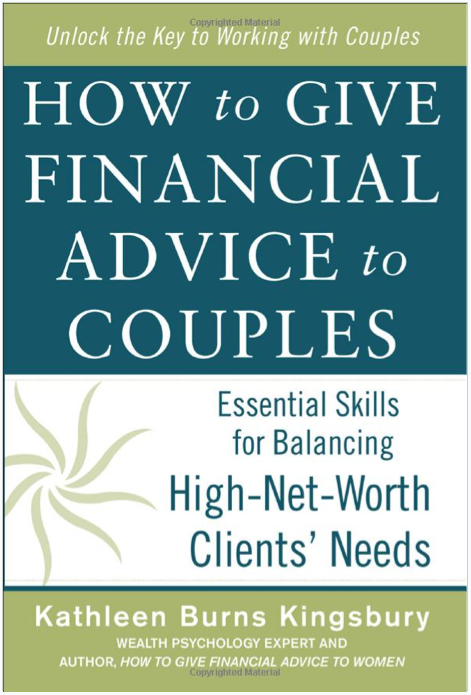 Money matters can get complicated for couples who may not see eye to eye. In a recent interview with Squared Away, Kathleen Burns Kingsbury, author of the new book, “How to Give Financial Advice to Couples,” shared her tips and insights for couples trying to meet in the middle.
Q: In a relationship, is money about more than just money?
Kingsbury: Money is often a reflection of our feelings about security, respect, love, power – it really symbolizes these things, whether we’re aware of it or not. So how a couple talks about money and manages their money is a reflection of how they relate to each other in other areas as well.
Q: Explain “money beliefs”?
Kingsbury: A money belief is a thought or attitude toward money that influences your savings, spending, investing and gifting every day. These beliefs tend to reside in our unconscious thought. Because we live in a society where money talk is taboo, we often don’t identify these attitudes. But money beliefs are formed between the ages of 5 and 15 by observing the financial behavior and attitudes of parents or people around us. And these money beliefs tend to be oversimplified, because they were formed in a child’s mind.
Q: Why is it important for husbands and wives to compare their beliefs?
Kingsbury: When couples are arguing about money, they may be arguing about which bills to pay or how to pay for a daughter’s college. But what’s really going on is they’re hitting up against their different money beliefs.
A: What’s an example? …Learn More

December 5, 2013
Laid-off Boomers: Retirement as Default
The natural reaction to losing a job is to get a new one. But when older people become unemployed, some view it as a dilemma: look for work or just retire?
The presence of a financial safety net significantly increases the likelihood that an older, unemployed person will retire. And that decision often comes quickly after they lose their job, concluded a new study by Matt Rutledge, an economist for the Center for Retirement Research, which supports this blog.
“The brevity of [their] jobless spells suggests that older individuals have little tolerance for a job search” and will “make a quick exit” if they have financial resources backing them up, Rutledge wrote in a recent summary of his research.
His findings get to the heart of the difficult choices facing older workers when they are laid off, no more so than amid the Great Recession when the jobless rate among people over age 55 hit a record 7.3 percent. Rutledge tracked individuals between 55 and 70 who lost their jobs between 1990 and 2012. …Learn More

October 31, 2013
Fraud Scares Off Stock Investors
The evidence is clear: fraud causes investors to shed their shares of stock.
When the stock market is booming, fraud swirls unnoticed beneath the frothy surface. Only when the market busts, as it did in the fall of 2008, are allegations of fraud and financial shenanigans exposed to the public.
When they are, and rattled investors realize what has taken place, they decrease their stock holdings – whether they own shares in any of the fraudulent companies or not – according to researchers in Stockholm and at the University of Minnesota.
Their study analyzed changes in equity holdings among U.S. households in response to more than 700 Securities and Exchange Commission charges and other reports of fraud from 1984 through 2009. The researchers focused on investors state by state, based on the assumption that allegations of fraud at local companies were more visible and would be more likely to affect an investor’s decisions. They also controlled for economic effects, which can influence investors’ decisions.
Their findings are:
- Reports of fraud in a given state made investors in that state less likely to hold stocks. …

October 3, 2013
Compulsive Spender? Blame Your Parents
There’s a bright line between an impulse purchase and compulsive spending.
When something new catches her eye, the impulsive buyer snaps it up and enjoys the splurge. There is no such enjoyment for the compulsive buyer. The act of buying temporarily alleviates her anxiety but she inevitably feels guilt or regret.
A new study explores the childhood experiences that lie at the root of why some people – women more than men – develop these damaging spending problems, which can lead to enormous debts and derail plans to save for the future.
The specific goal of the study, based on surveying 327 college students, was to shed light on the emotional pathways that can lead to compulsive buying, explained researcher Anil Mathur, a marketing professor at Hofstra University. The experiences the researchers associated with this behavior include disruptive family lives, more controlling parents, and teens who seek out peers to support their spending. …Learn More

September 26, 2013
Social Security Claiming and Psychology
It’s common for people to begin collecting their Social Security benefits soon after they turn 62, ignoring the financial planners and retirement experts urging them to postpone and increase the size of their monthly checks.
A new study has uncovered four powerful psychological traits that influence this decision: the individual’s expected longevity, his fear of loss, whether he perceives the Social Security system as fair, and patience.
The study surveyed some 3,000 people, primarily in their 40s and 50s. This is a good age to ask about Social Security, because claiming the benefit is a few years away, “but they’re thinking more about it,” researcher Suzanne Shu said when presenting the findings at an August meeting of the Retirement Research Consortium in Washington.
In an online survey, Shu, who is from the University California at Los Angeles, and John Payne, from Duke University, posed a series of questions designed to understand the psychology of the individuals they were studying. They also asked when they planned to claim their Social Security and then determined which psychological traits were linked to those who said they planned to file early.
Four influences on claiming came out of their preliminary findings:
Fear of loss. People who have a stronger aversion to financial loss also tended to say they would claim earlier. To them, the researchers said, a delay in receiving their benefit checks “looks like a potential loss.” …Learn More
August 20, 2013
What’s Your ‘Money Script’?
Our subconscious often stands in the way of our conscious efforts to save for college, prepare for the future, or spend what we’ve saved once we retire.
Some psychologists and financial planners believe these roadblocks are rooted in an individual’s “money script” – the story about money that we’ve told ourselves repeatedly since childhood. They’re typically passed down from our parents, extended family, or culture, and they are extremely difficult to change.
Writing in the Journal of Financial Planning, two experts in financial psychology, Bradley Klontz and Sonya Britt, presented their research associating three specific money scripts to poor financial behavior. Their study was based on a survey of 422 individuals who were largely middle-aged, white, and highly educated.
Click on a money script in one of the boxes below to read their descriptions of each one, excerpted from the November JFP article, to see if any apply and to learn how they affect the way we relate to money.
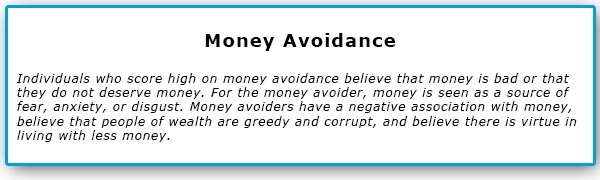


The researchers found that one person can hold multiple scripts, and these scripts can even contradict each other. …Learn More
About Squared Away

Learn more about our blog and its writer, Kimberly Blanton, a former Boston Globe reporter.
