

Posts Tagged "psychology"
February 16, 2012
Impulse Saving May Be ‘New’ New Thing
You’ve heard of impulse purchases. But how about impulse saving?
It’s purely an idea at this stage, and it may not work. But a New York City check-cashing firm plans to start a program that will allow customers to throw $20, $10, even $1 into savings – on impulse – when they’re cashing a check or flush with cash.
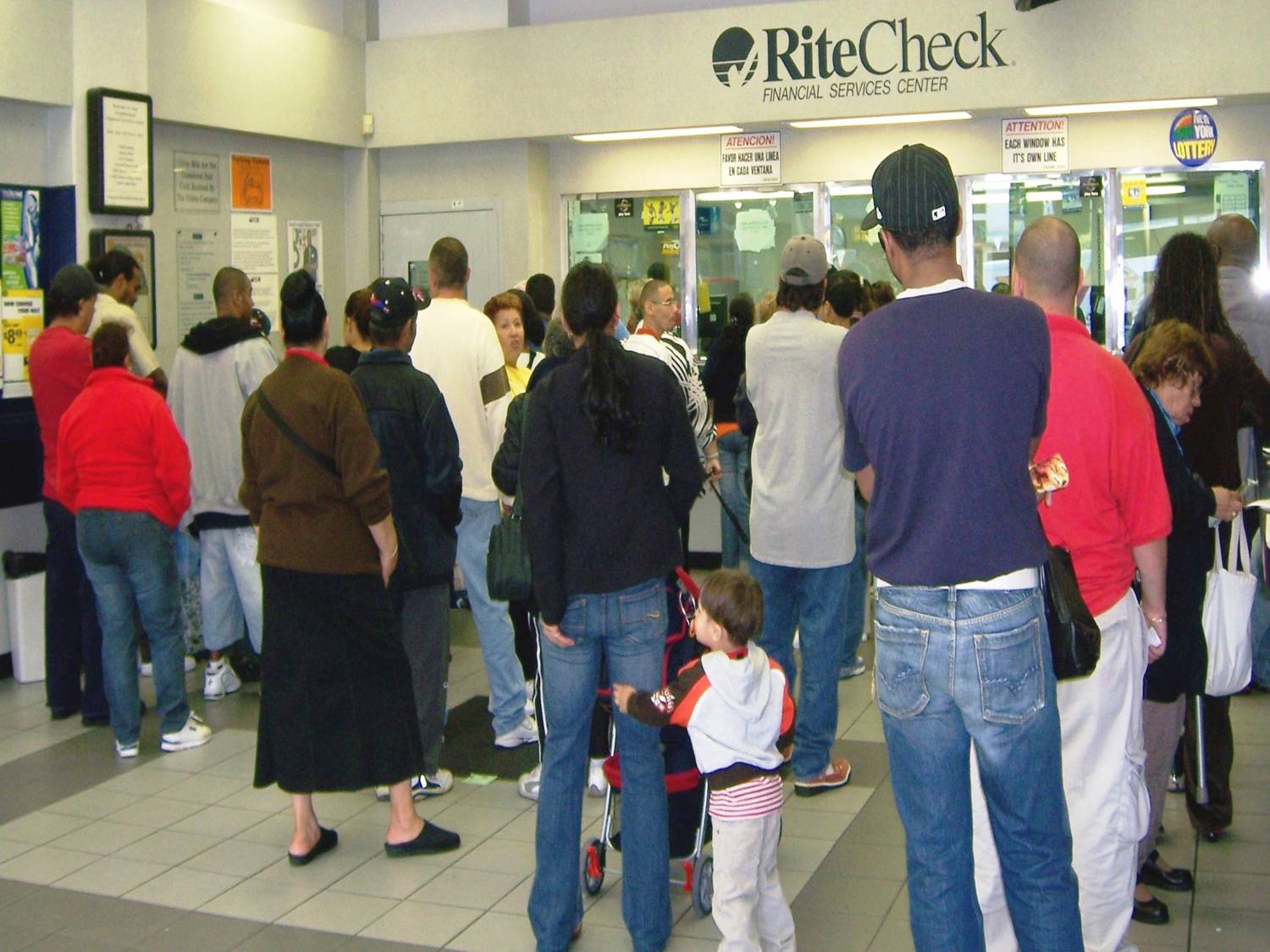 “I know my customers,” said Joseph Coleman, president of RiteCheck Cashing Inc., which has 12 stores open 24/7 in Harlem and the Bronx. “If they could put $5 away or $20 away for a television they wanted, to buy a car, or for Christmas, they would do it.”
Key to making the program work is simplicity, operating on the theory that barriers and red tape thwart savings deposit; if a customer wants to open a savings account, RiteCheck will print an application that’s already filled out and needs only a signature. RiteCheck teamed up with long-time business partner Bethex Federal Credit Union to open and manage the accounts.
“People have intensions to save” but “get derailed by the lack of a clear, easy path to start saving,” said Innovations for Poverty Action’s (IPA) Jonathan Zinman, a Dartmouth College economist who worked with Coleman to create the product. The non-profit IPA granted $15,000 this month to set up RiteCheck’s program…Learn More

February 9, 2012
The Science Fiction of Financial Markets
A lot of us feel when we look at the Dow Jones plunging [that] we’re in the grip of some alien force that slips human control. — Novelist Robert Harris
The stock market in May 2010 seemed to “come alive” when it swooned 1,000 points within minutes, Harris said in a bone-chilling radio interview that’s worth a listen for Main Street investors.
His new thriller, “The Fear Index,” which the London Telegraph called “unputdownable,” is about a hedge fund manager. But in the interview, Harris expressed his desire to take readers beyond the business reporter’s technical explanations for the market’s wild swings up or down. A solitary, $4 billion trade, the media widely reported, caused the 2010 Flash Crash that left an impression on the novelist. As Europe teeters on recession, it’s anyone’s guess how the Standard & Poor’s 500 stock market index has managed to soar more than 7 percent since Jan. 1.
Wall Street experts may be able to make sense of a hair-trigger market, but Harris’s sci-fi explanation is appealing to the rest of us. He invokes the imagination – or, perhaps I should say, the artificial intelligence lab at the Massachusetts Institute of Technology.
To hear Harris’ interview on National Public Radio, click here.Learn More
January 12, 2012
Present and Future Selves Do Battle
Squared Away keeps hammering away at this point in various ways, because it seems so central to our financial well-being: we can’t fully relate to our future selves, which makes it difficult to save money.
This is the psychologist’s take on what mainstream economists would call “discounting” the future – that is, the future is less important than what’s going on today. Buying a new pair of shoes or an ice cream cone is a lot more fun than saving money for a future utility bill or a distant retirement date.
In this humorous Ted video, London Business School professor Dan Goldstein explains that all humans are engaged in an “unequal battle” between our present self (the consumer) and our distant self (the saver).
“The future self doesn’t even have a lawyer present,” he said. Goldstein entertains as he proposes ways to intervene in our inner battle.Learn More
December 20, 2011
Cheatin’ Art Exhibited at Duke
 Money and cheating go hand in hand – now add art to the mix.
An art exhibit was inspired in part by the research that found a “robust relationship between creativity and dishonesty” by Francesca Gino at the Harvard Business School and Dan Ariely of Duke University, a behavioral economist who founded Duke’s Center for Advanced Hindsight, the location of the exhibit.
What does the art say to you – about financial planning, the scammers who slink among us, or our money culture? Squared Away picked pieces by two of the exhibit’s 22 artists, who are from North Carolina, Israel and elsewhere. The artists’ explanations are included with their work: …
Learn More

November 10, 2011
Are You Conscientious?
In a recent study of five personality traits, conscientiousness was the strongest determinant of an individual’s financial well-being.
Angela Lee Duckworth at the University of Pennsylvania and David Weir at the University of Michigan compared how people did on a personality test with their financial well-being after age 50. They examined the Big Five traits: conscientiousness, emotional stability, agreeableness, extroversion, and openness to experience.
Their finding about the power of conscientiousness adds to a spate of research combining psychology and economics to predict why people earn more, save more, or prepare for retirement. In another study, Australian researchers found that a child’s level of self-control, as early as age 3, can predict whether he or she will experience financial problems later in life.
So, what is conscientiousness and do you have it? I could tell you about it, but watch the video interview of Duckworth instead, on the University of Michigan Center for Retirement Research’s website.
Hint: is your desk clean?
Full disclosure: The research cited in this post was funded by a grant from the U.S. Social Security Administration (SSA) through the Retirement Research Consortium, which also funds this blog. The opinions and conclusions expressed are solely those of the blog’s author and do not represent the opinions or policy of SSA or any agency of the federal government.

November 8, 2011
Long-Term Care: To Buy or Not to Buy
Let’s face it: thinking about long-term care insurance, nursing homes and home health aides is depressing.
It’s no wonder that just 10 percent to 12 percent of America’s elderly population has purchased a long-term care policy.
More are thinking about it though: New research shows that 40 percent of people 50 years or older who were surveyed had “thought a lot about needing long-term care” if they were to become ill in old age.
This research delved into the factors driving individual decisions about whether to buy long-term care coverage – or not buy. The decision “depend(s) on a complex amalgam of many different factors,” concluded a conference paper based on research conducted by the NBER Retirement Research Center.
Here are some of the findings in the paper, by Jeffrey Brown at the University of Illinois, Gopi Shah Goda at Stanford University, and Kathleen McGarry at the University of California at Los Angeles: …Learn More

October 27, 2011
How Rich is Rich?
Occupy Wall Street protesters have made their feelings known about the widening U.S. wealth gap.
So, what do the rest of us think?
A Harvard Business School professor – Michael Norton – and a behavioral economist – Dan Ariely – teamed up to ask people their preferences when it comes to the distribution of wealth. They found that Americans of all types and political affiliations “vastly underestimated” the magnitude of the difference between rich and poor in this country.
At a time many people are suffering in the slowing economy and languishing job market, it’s interesting to see a comparison between what Americans believe about U.S. wealth distribution and the reality they inhabit.
The American rags to riches myth endures – young adults are inspired by it; immigrants come here to pursue it; and millions play state lotteries every year in hopes of hitting the jackpot. Not surprisingly, the authors found that both rich and poor said some level of inequality is okay.
“This is an admirable part of America,” Norton said in a recent interview with Squared Away. “It’s just that people overestimate the extent to which it happens.” …Learn More
About Squared Away

Learn more about our blog and its writer, Kimberly Blanton, a former Boston Globe reporter.
