

Posts Tagged "retirement"

April 1, 2021
What the Research Can Tell us about Retiring
It’s difficult to envision what life will look like on the other side of the consequential decision to retire.
But research can help demystify what lies ahead – about the decision itself, the financial challenges, and even the taxes. Readers understand this, as evidenced by the most popular blog posts in the first three months of the year.
Here are the highlights:
The retirement decision. The article, “Retirement Ages Geared to Life Expectancy,” attracted the most reader traffic. Myriad considerations go into a decision to retire. But a sense of whether one might live a long time – because of good health or simply seeing that parents or neighbors are living unusually long – is a compelling reason to postpone retirement either to remain active or to build up one’s finances to fund a longer retirement.
A recent study found that as men’s life spans have increased, they have responded by remaining in the labor force longer, especially in areas of the country with strong job markets and more opportunity. This is also true, though to a lesser extent, for working women.
The planning. The second most popular blog was, “Big Picture Helps with Retirement Finances.” It described the success researchers have had with an online tool they designed, which shows older workers the impact on their retirement income of various decisions. When participants in the experiment selected when to start Social Security or how to withdraw 401(k) funds, the tool estimated their total retirement income. If they changed their minds, the income estimate would change.
The tool isn’t sold commercially. But it’s encouraging that researchers are looking for real-world solutions to the financial planning problem, since the insights from experiments like these often make their way into the online tools that are available to everyone.
The taxes. It’s common for a worker’s income to drop after retiring. So the good news shouldn’t be surprising in a study highlighted in a recent blog, “How Much Will Your Retirement Taxes Be?” Four out of five retired households pay little or no federal and state income taxes, the researchers found. But taxes are an important consideration for retirees who have saved substantial sums. …Learn More
April 16, 2020
Fewer Choosing Annuities in TIAA Plan
 In a 401(k) world, purchasing an annuity is one way to turn retirement savings into a reliable source of income. But annuities have never been popular.
Now, a new study finds they are losing appeal even among some employees who historically purchased annuities at much higher rates than the general public: members of the TIAA retirement savings plan – one of the nation’s largest. Until 1989, TIAA required that retirees convert their savings into annuities.
Even in 2000, one out of two participants putting money in TIAA would eventually take their first withdrawal in the form of one of the annuity options the plan offers to retirees.
But by 2017, this number had dropped to about one in five, according to an NBER study for the Retirement and Disability Research Consortium that followed some 260,000 employees with careers at universities, hospitals, and school systems.
The researchers identified two distinct groups in terms of their annuity activity.
The first group tended to have smaller account balances and started tapping annuities in their retirement plans prior to the age when retirees are subject to the IRS’s required minimum distribution (RMD), which was, at the time of the study, 70½. Over the period studied, annuity selections by the first group fell from 57 percent to 47 percent.
The second group – people who had larger balances and didn’t touch their retirement accounts until after the RMD kicked in – saw their annuitization rate plummet from 37 percent to just 6 percent of the participants. …Learn More

April 9, 2020
Social Security Tapped More in Downturn
It happened after the 2001 and 2008-2009 recessions, and it will happen again. Some older workers who lose their jobs will turn, in desperation, to a ready source of cash: Social Security.
In the wake of a stock market crash like the one we just experienced, baby boomers’ first inclination will be to remain employed a few more years to make up some of the investment losses in their 401(k)s. But as the economy slows and layoffs mount, that may not be an option for many of the unemployed boomers, who will need to get income wherever they can find it.
Age 62 is the earliest that Social Security allows workers to start their retirement benefits. In 2009, one year after the stock market plummeted, 42.4 percent of 62-year-olds signed up for their benefits, up sharply from 37.6 percent in 2008, according to the Center for Retirement Research (CRR).
Social Security is a critical source of income even in good times. One out of two retirees receives half of their income from the program, and they can also count on it when times get tough.
But the financial cost of starting Social Security prematurely is steep, because it locks in a smaller monthly benefit for the rest of the retiree’s life. For those who can wait, the size of the monthly check increases an average 7 percent to 8 percent per year for each year claiming is delayed up until age 70.
Unfortunately, the people who claimed Social Security early in the wake of the 2001 recession had fewer financial resources to begin with – namely, their earnings were lower, they had less wealth, and they were less likely to have a spouse to fall back on – according to the CRR study.
“These simple characteristics suggest that those hardest hit by recessions are most likely to use Social Security as an income-insurance policy,” the researchers concluded. …Learn More
April 7, 2020
Our Parents Were Healthier at Ages 54-60
Baby boomers aren’t as healthy as their parents were at the same age.
This sobering finding comes out of a RAND study that took a series of snapshots over a 24-year period of the health status of Americans when they were between the ages of 54 and 60.
The researchers found that overall health has deteriorated in this age group, and they identified the specific conditions that are getting worse, including diabetes, pain levels, and difficulty performing routine daily activities.
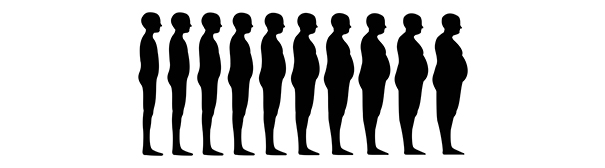
Obesity is an overarching problem: the share of people in this age group with class II obesity, which puts them at very high risk of diabetes, tripled to 15 percent between 1992 and 2016.
In addition to declining health, the study for the Retirement and Disability Research Consortium uncovered strong evidence of growing health disparities among 54 to 60-year-olds: the poorest people are getting sicker faster than people with more wealth.
The increase in women’s pain levels has been starkest over the past 24 years. The wealthiest women have seen an increase of 6 percentage points in the share experiencing moderate to severe pain from conditions like joint or back pain. But the poorest women saw a 21-point leap. The disparity for men was also large: up 7 points for the wealthiest men versus 15 points for the poorest men.
The bottom line: today’s 54 to 60-year-olds are not as healthy as their parents were, and the study suggests that the disparities between rich and poor will continue to grow.
To read this study, authored by Peter Hudomiet, Michael D. Hurd, and Susann Rohwedder, see “Trends in Health and Mortality in the United States.”Learn More

April 2, 2020
1st Quarter: Our Most Popular Blogs
People born smack in the middle of the baby boom wave, including many of this blog’s readers, are now in their mid-60s and have retired – or, at least, they were planning to retire before the stock market crashed.
Some of your favorite articles in the first quarter, based on the blog’s traffic, were about the nuts-and-bolts of retirement, including one that ranked retiree living standards by state.
The 10 most popular blogs listed below ran before the coronavirus changed our lives but they may still hold kernels of wisdom that will be useful in these trying times.
For example, one article reported on the $38 million in misplaced retirement funds from prior employers. If you think you have a long-lost retirement plan, search the unclaimed property account in the state where you worked.
Or, if you’d already committed to retiring before the market drop, it’s become more important to fashion a satisfying lifestyle. One blog explores how to prepare for retirement.
Our readers’ most popular blogs in the first quarter were:
Have You Misplaced a Retirement Plan?
Can’t Afford to Retire? Not all Your Fault
Mapping Out a Fulfilling Retirement
Most Older Americans Age in their Homes …Learn More

March 24, 2020
If People Can Work Longer, They Will
A majority of adults believe there’s better than a 50-50 chance they will still be working full-time after age 65, a new study found.
The evidence suggests this goal is fairly realistic.
In the study, adults ranging in age from 18 to 70 were asked to rate themselves on a 1-to-7 scale for 52 different cognitive, physical, psychomotor, and sensory abilities that determine their capacity to work. These abilities run the gamut from written comprehension, pattern recognition, and originality to finger dexterity, reaction time, and vision acuity.
Of course, physical abilities decline with age. But when the researchers compared older and younger participants in the study, they found that many self-assessments of their abilities were very similar. For example, psychomotor abilities – such as hand steadiness, manual dexterity, and coordination – were at peak levels for the people in their 30s. But these abilities were only slightly diminished for the people in their 60s. And despite concerns about cognitive decline among older workers, the difference between 50- and 60-year-olds was minor.
The heart of the research, funded by the U.S. Social Security Administration, was determining whether each individual’s distinct set of abilities affected his or her work capacity, as well as how long and how much the individual intends to work as they age. This issue is important, because extending a career is a powerful way to improve one’s financial security after retirement.
To determine this capacity for work, each individual’s self-assessed abilities were matched up with the skills required to do nearly 800 different U.S. occupations. The researchers then calculated the percentage of these occupations each person would be able to do, given their education and training level.
Here are three of the central findings:
The more occupations people can do, the more likely they were to say they would work past 65.
Workers over 60 with a higher capacity to work said they would be more likely to remain employed even after 70.
One in four of the retirees with a very high capacity for work would consider “unretiring” and returning to the labor force. …Learn More

March 19, 2020
People on Disability Use Payday Loans
Taking out a high-cost payday loan is an act of desperation, and people on federal disability are some of the biggest users.
Nearly 6 percent of households under 66 and on disability use payday loans, compared with 4 percent of the general population, according to Haydar Kurban at Howard University, who did the analysis for the Retirement and Disability Research Consortium.
The financial vulnerability of disability recipients was starkest in the months after the 2008-2009 recession, when their use of payday loans spiked to 22 percent. The rate of borrowing also rose at the time for the general population but by much less.
Disability benefits under the federal Supplemental Security Income (SSI) program average about $900 a month. To eke out a living, people on disability try to supplement their income with food stamps, Medicaid, some work, or housing assistance from the government or a family member – and some use payday loans to raise quick cash. (A small share of people in this study are not disabled but receive SSI to supplement their Social Security benefits.)
Despite the very low incomes of the disability beneficiaries, they are attractive customers for payday lenders, Kurban said, because the benefit checks provide extra assurance the loans will be repaid. …
About Squared Away

Learn more about our blog and its writer, Kimberly Blanton, a former Boston Globe reporter.
